
Why Oneness Doesn’t Mean Sameness
In its deeper sense, oneness doesn’t mean everyone thinking the same way, acting the same way, or being flattened into a group identity. That version of “unity” is coercive—and rightly resisted.
What spiritual traditions tend to mean by oneness is something quieter and more human:
- respect without erasure
- connection without control
- togetherness without loss of self
In that way, oneness is closer to how the word love works.
When we talk about love in everyday language, we often mean romance—pairing off, attachment, exclusivity. But in its broader sense, love is about care, kindness, and recognizing the inherent worth of another person. Romance can be a powerful expression of love, but it isn’t the definition.
Oneness works the same way.
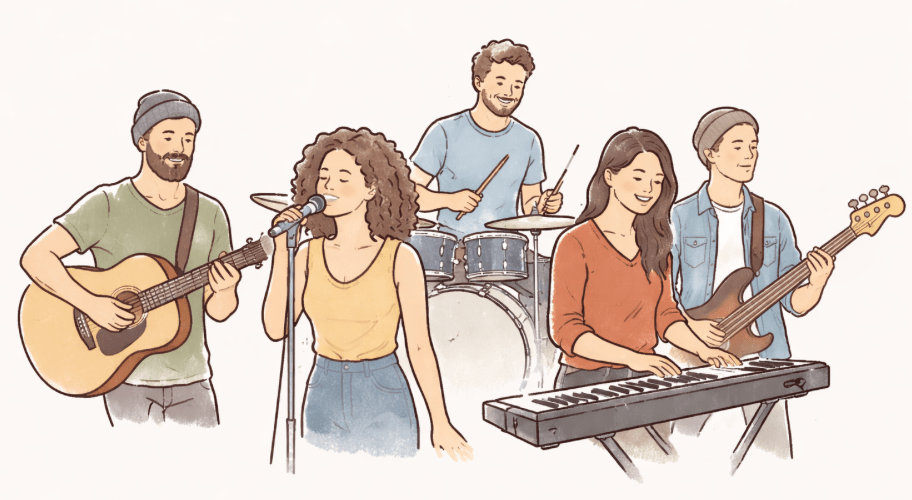
A better metaphor: music
I’ve been watching reaction videos lately—musicians responding to classic tracks from the 1960s and ’70s. Names like the Wrecking Crew or the Funk Brothers come up again and again.
These weren’t faceless collectives. They were fiercely individual musicians—each with their own style, instincts, and voice. But when they played together, something extraordinary happened. The result was bigger than any one person, not because individuality disappeared, but because it was listened to.
That’s oneness.
Not a hive.
Not a blur.
But synergy.
Each musician remained fully themselves, yet contributed to a shared field of creation that none of them could have produced alone.
Why the word still matters
I think people are right to be cautious about language that has been used to justify control or conformity. But abandoning the word oneness entirely also costs us something important.
Because there is a real human experience being pointed to:
- moments of cooperation that feel natural rather than forced
- communities that protect individuality instead of punishing it
- creative collaboration where the whole truly exceeds the sum
When oneness is healthy, participation is voluntary. Voices aren’t silenced—they’re harmonized.
If the word feels loaded, there are others that point in the same direction:
interdependence, coherence, mutuality, common ground.
But whatever word we use, the idea matters.
Not one voice—many, held together
True oneness isn’t a band where everyone plays the same part.
It’s skilled musicians bringing their own instruments into a shared groove—by listening.
It isn’t losing yourself in the crowd.
It’s discovering that who you are has a place.
And in a time when polarization is loud and fear is profitable, that distinction feels worth making—carefully, respectfully, and without surrendering our individuality to anyone.
 The Liberty and Prosperity Plan
Leave a comment