
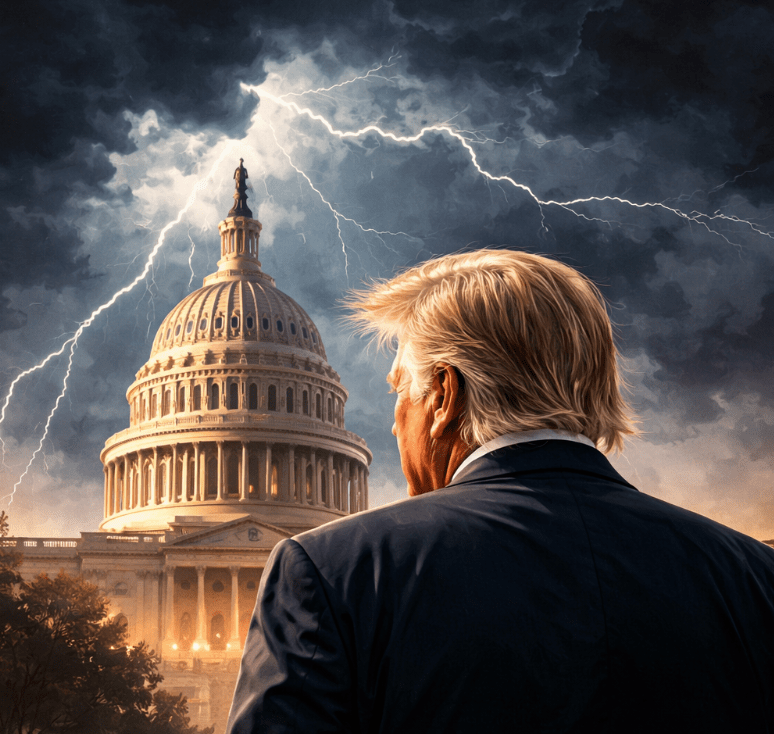
This morning, while watching a discussion about cognitive health and leadership, I encountered a term I had never before seen — frontotemporal dementia (FTD). That encounter prompted me to delve deeper and re-examine something many of us feel in our bones but have struggled to articulate: What happens when those in positions of greatest national authority show changes in judgment, behavior, or impulse control that make us — as citizens — fearful for our future?
It’s essential to be clear, thoughtful, and non-defamatory in this space: no credible medical diagnosis of any individual can — or should — be made from afar. This post is not an attempt to diagnose anyone. It’s a reflection on the medical concept of frontotemporal dementia, why some respected professionals raise concerns about behavioral and cognitive changes that resemble those seen in this and other dementias, and what constitutional mechanisms exist to address genuine incapacity in the highest office.
What Is Frontotemporal Dementia (FTD)?
Frontotemporal dementia is a medically recognized neurodegenerative condition involving progressive loss of nerve cells in the brain’s frontal and temporal lobes. These brain regions are essential for judgment, inhibition, social behavior, emotional regulation, language, and self-monitoring — capacities that are deeply significant for anyone, but especially for national leaders entrusted with enormous power.
Unlike Alzheimer’s disease, which is strongly associated with memory loss, FTD often presents with changes in behavior and personality, including disinhibition, impulsivity, reduced empathy, inappropriate social behavior, or confabulation — the construction of narratives that fill memory gaps without awareness they are inaccurate.
FTD progresses over time and, although life expectancy varies, it usually worsens gradually but steadily, ultimately impairing day-to-day functioning and decision-making.
Why Discussion About Cognitive Fitness Matters for a President
In our democracy, elected leadership is expected to act with sound judgment, restraint, and commitment to the safety and well-being of the nation and the world. When observers — including some clinicians and scholars — raise concerns about patterns of behavior that resemble symptoms seen in dementia, those concerns must be considered seriously, without stigmatizing actual people with dementia, and without presuming a diagnosis without clinical evaluation.
Professional discussion on public platforms, including interviews and articles with seasoned psychologists and psychiatrists, has highlighted patterns they describe in terms that align with clinical descriptions of cognitive decline — for example, erratic language patterns, confabulation, impulsive statements, and changes in behavioral restraint.
Those patterns can be unsettling precisely because the presidency carries unique responsibilities: control of the U.S. military, stewardship of diplomacy, and authority over decisions that affect global peace and security.
It is reasonable for citizens, journalists, and members of Congress alike to examine observable behavior and demand transparency, assessment, and accountability. But it is not medically or ethically appropriate to label an individual as having a specific neurological disorder without direct clinical evaluation.
The Constitutional Mechanism Exists — But It’s Rare and Serious
🟨 The 25th Amendment to the U.S. Constitution provides a legal, non-partisan mechanism for addressing incapacity in a sitting president. Section 4 of that amendment allows the Vice President and a majority of the Cabinet (or a body designated by Congress) to declare that the president “is unable to discharge the powers and duties of his office,” and temporarily transfer authority to the Vice President. 🟨
If the president contests that declaration, Congress must then decide within a set period. This mechanism has been discussed periodically in U.S. history, precisely because no political office is immune to the possibility that the holder of that office may encounter health challenges affecting their ability to lead.
The framers of the 25th Amendment anticipated this reality — not as a partisan tool, but as a safeguard for the republic and the world.
Why Thoughtful Public Discussion Is Important
There is a difficult balance to be struck here:
- We must reject name-calling, ageism, or uninformed speculation.
- We must respect individuals living with real neurological conditions and the dignity of those humans and their families.
- We must not weaponize medical conditions for political gain.
At the same time, we — as citizens — have a responsibility to ask serious questions about leadership capability, especially when observable actions have constitutional, humanitarian, and geopolitical consequences beyond our borders.
If a president orders military action absent congressional authorization, or exerts other authorities in ways that test the boundaries of constitutional power, the concern is not about personality alone — it’s about stewardship of institutions and peoples, American and global.
A Call for Good Faith, Evidence-Based Reflection
My intention in writing this is not to cast judgment, but to spark a measured, respectful, fact-oriented public conversation about leadership fitness, democratic safeguards, and citizen engagement. Discussions about neurological health — especially in aging public figures — must be grounded in medical reality and constitutional understanding.
We do not have a clinical evaluation to point to — and we should make that clear in every conversation. But we also have observable public behavior and real constitutional tools designed precisely for difficult moments like this.
In a time of global uncertainty, the future of peace and democratic stability depends on clarity, courage, and civic conversation rooted in both compassion and truth.
 The Liberty and Prosperity Plan
Leave a comment